




Today, at the State Palace, President Joko Widodo, accompanied by Minister of Communication and Informatics Johnny G. Plate and Minister of State Secretary Pratikno, observed the signing of key programs by the Ministry of Communication and Informatics as part of the 2021 digital connectivity acceleration initiative.
These programs included the signing of contracts for the construction of Base Transceiver Stations (BTS), satellite capacity provisioning, the launch of the Digital Talent Scholarship (DTS) program, and the unveiling of a commemorative postage stamp series for the National COVID-19 Vaccination Movement. Since the onset of the pandemic, President Joko Widodo has firmly instructed all relevant ministries and institutions to accelerate digital transformation across the country.
“In the past five years, the government has worked hard to build national connectivity—not only through sea tolls, rail networks, toll roads, border-area roads, airports, and seaports—but also through digital connectivity that links the entire archipelago via a ‘sky toll’. This is not solely for economic purposes but also to unify our vast nation and improve education, healthcare, and cultural services, while strengthening our national unity,” explained President Joko Widodo.
“I hope the 2021 digital connectivity program will become a crucial momentum to connect Indonesia with new technologies, new mindsets, new global business opportunities, and a new future toward an advanced Indonesia. However, our digital connectivity must always uphold national sovereignty amid today’s globalized and competitive environment,” the President emphasized.
The Ministry of Communication and Informatics has outlined several key priorities for digital transformation. Two priorities closely related to today’s event are:
- Continuing the development of ICT infrastructure by enhancing national telecommunications connectivity and narrowing the digital divide. This includes internet access expansion by BAKTI (Telecommunication and Information Accessibility Agency), which aims to cover 12,548 villages/wards currently lacking 4G coverage, out of a total of 83,218 villages/wards (based on 2016 data from the Civil Registration Office, Dukcapil).
- This major project is planned to be completed within two years, by the end of 2022—ten years ahead of the initial target of 2032. Improving digital literacy and skills, through the National Digital Literacy Movement (GNLD) Siberkreasi, which has provided basic digital skills training and was awarded the Winner of the 2020 World Summit on the Information Society (WSIS) Prizes.
For intermediate-level skills, the Digital Talent Scholarship (DTS) program has trained 58,000 participants, of which 34,333 have received national and global certifications—with more expected to follow.
In terms of digital infrastructure development, BAKTI has made significant progress in 3T (underdeveloped, frontier, and outermost) areas. By 2020, BAKTI had built 4G BTS in 1,682 locations and provided internet access in 11,817 locations, including 3,126 healthcare facilities under the National Economic Recovery Program (KPC-PEN).
Additional infrastructure achievements include:
- Provision of 21 Gbps satellite capacity,
- Completion of the 12,229 km Palapa Ring fiber optic backbone (4,156 km terrestrial, 8,073 km submarine),
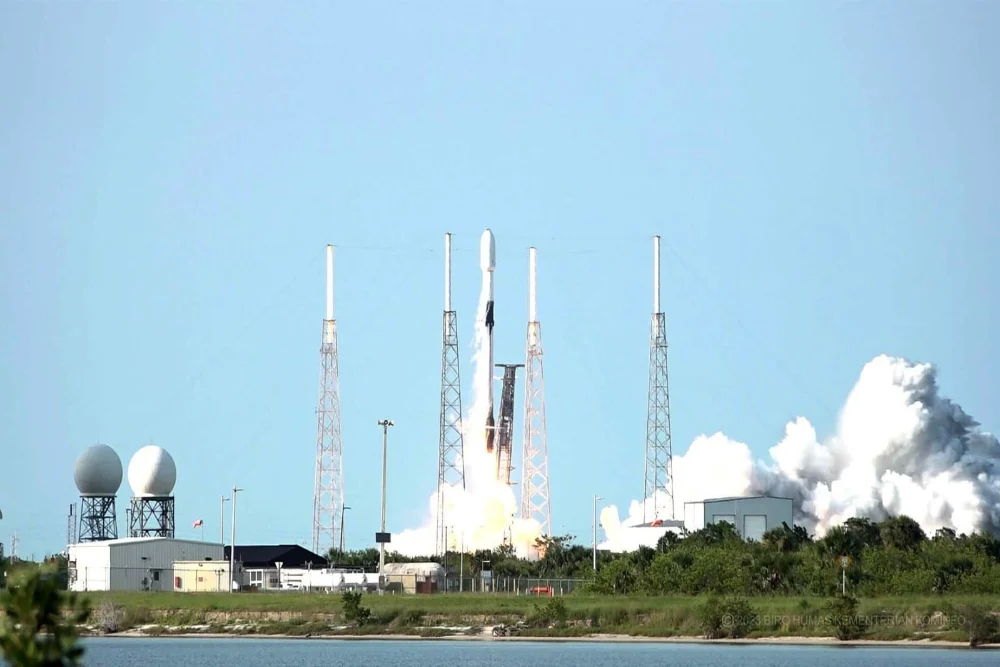
- Development of the Republic of Indonesia Satellite (SATRIA-1), currently in the preparatory work agreement phase and expected to enter construction in 2021.
“Financial support for government programs such as the SATRIA satellite also demonstrates the confidence of global financial institutions in the Indonesian government and its investment climate,” said Minister Johnny G. Plate.
Satellite Capacity Provision
Kominfo, through BAKTI, also signed contracts following a procurement process for satellite telecommunications and internet services to support digital transformation, announcing six winning bidders on January 13, 2021. Letters of Appointment were issued on January 27, 2021, with contracts signed by:
- PT Bis Data Indonesia
- PT Dwi Tunggal Putra
- PT Primacom Interbuana
- PT Telekomunikasi Indonesia Tbk
- PT Indo Pratama Teleglobal
- PT Pasifik Satelit Nusantara.
Since 2015, the government has planned satellite infrastructure development through the Government-to-Business Cooperation (KPBU) for the SATRIA Multifunctional Government Satellite, aimed at meeting high-speed internet needs in approximately 150,000 locations.
As SATRIA is only expected to be operational by 2023, BAKTI initiated the Stage I Satellite Capacity Provision Project in 2019 with five partners, aiming to improve procurement efficiency. This phase employed High Throughput Satellite (HTS) systems operating in the Ku-band, delivering about 21 Gbps of throughput nationwide.
The services have been operational since September 2019, supporting the Internet Access and Last-Mile BTS projects. As of January 2021, Phase I had served 5,224 Internet Access locations and 1,682 BTS locations.
Based on the tender results, the total satellite capacity from the six winning providers is approximately 9 Gbps, planned to serve around 4,574 Internet Access locations. These providers will use HTS technology operating in both Ka-band and Ku-band frequencies.
The beneficiaries of this Satellite Capacity Provision and Internet Service Project for Digital Transformation include regional government offices, especially village offices, schools, health clinics, public service centers, and communities in 3T regions.
The project will use a leasing scheme for both satellite capacity and internet services (charged per Mbps per month), with an estimated annual contract value of approximately IDR 679 billion. The framework contract is valid until December 31, 2024, and may be extended upon mutual agreement.
Source: merdeka.com